Online Desk
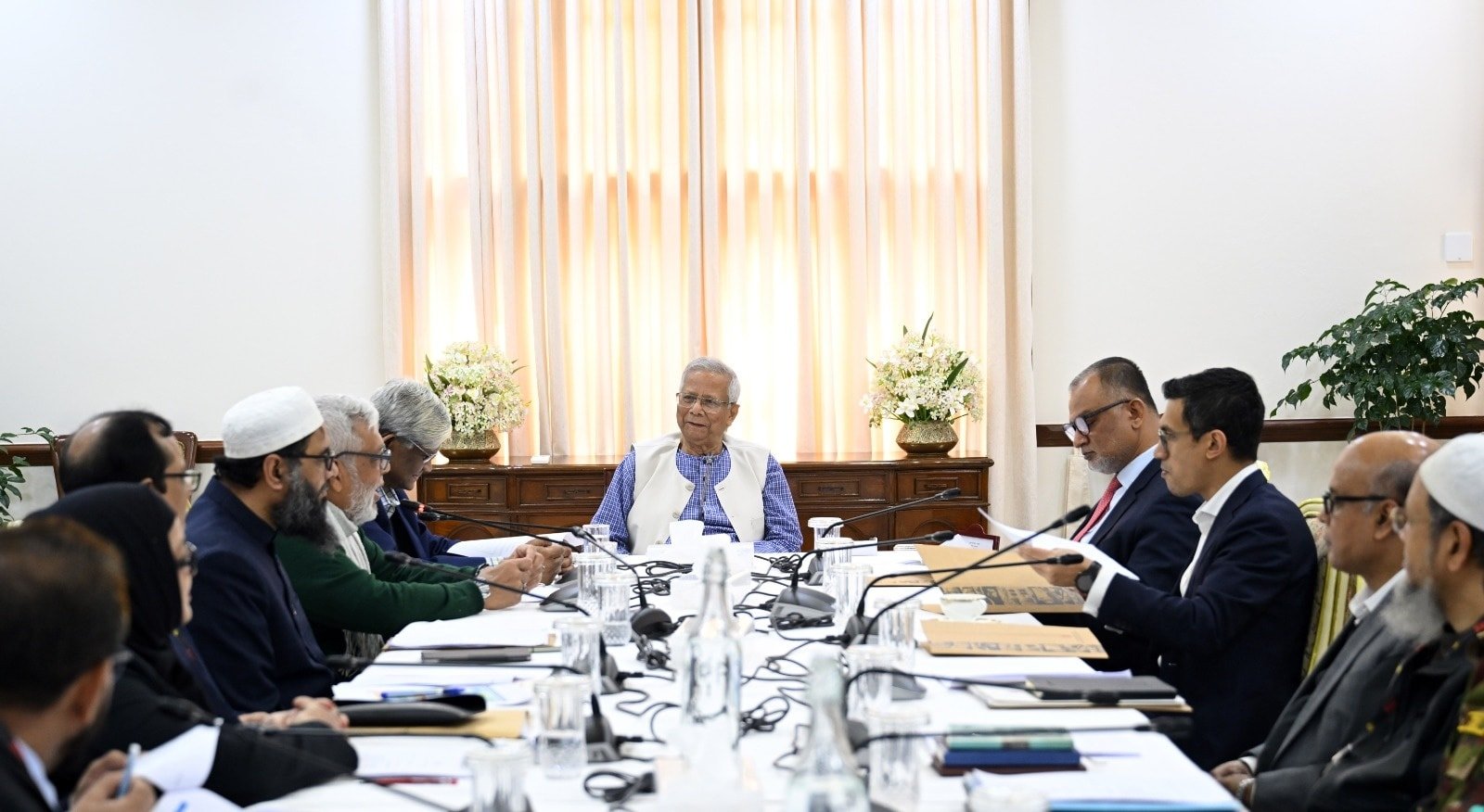
The Ministry of Power, Energy and Mineral Resources presented the Energy and Power Sector Master Plan 2026-2050 to Chief Adviser Professor Muhammad Yunus on Wednesday (7 January 2026).
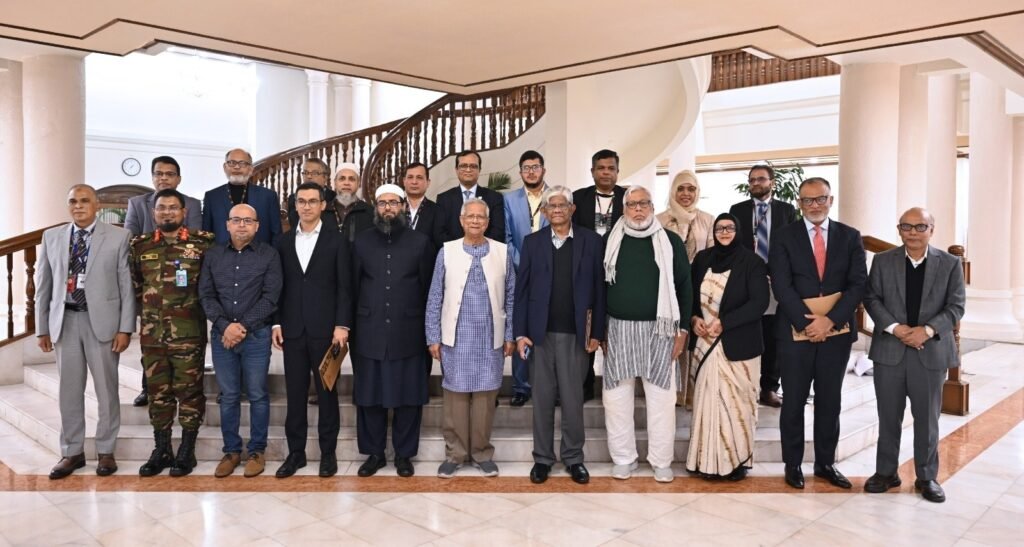
A meeting in this regard was held at the State Guest House Jamuna in the afternoon under the chairmanship of the Chief Adviser. Present at the meeting were Advisor to the Ministry of Power, Energy and Mineral Resources Muhammad Fawzul Kabir Khan, Finance Advisor Dr. Salehuddin Ahmed, Commerce Advisor Sheikh Bashir Uddin, Industry Advisor Adilur Rahman Khan, Executive Chairman of the Investment Development Authority (BIDA) Chowdhury Ashiq Mahmud Bin Harun, Special Assistant to the Chief Adviser at the Ministry of Posts, Telecommunication and Information Technology Faiz Ahmed Tayyab and senior officials of the concerned ministries.
The aim of this master plan is to ensure reliable, affordable and sustainable primary energy and power for all the people of Bangladesh through optimal use of domestic resources, ensuring energy security, increasing efficiency and environmental responsibility.
The meeting briefly reviewed the policy gaps of the previous three master plans and identified them. The implementation of the new master plan in three phases (Phase I 2026-2030, Phase II 2030-2040 and Phase III 2040-50) was discussed.
Among these, the Offshore Exploration Round, Gas Production Boost, LNG Supply Security, Refinery Capacity Expansion, Strategic Storage Expansion will be implemented in the First Track Priority Projects plan between 2026 and 2030.
Long-term strategic projects included offshore gas development, large-scale refining and petrochemical industry expansion, hydrogen and ammonia infrastructure development, geothermal energy development, and tidal and wave-based energy development plans.
The Chief Advisor thanked all concerned for highlighting the details of the power and energy sector in detail. He said, “This is the lifeblood of Bangladesh’s economy. If it is strong, the economy will stand. This sector affects the lives of every person in the country.”
The Chief Advisor has ordered the creation of a separate institution for research related to power and energy. He said, “There should be a separate institute for research and development. It should not be under the ministry. It will be a separate, powerful institution that will keep in touch with all the related organizations in the world and help the government in formulating policies.’
Referring that everything that has happened in the past is out of place, the chief advisor said, ‘We have to think from the very beginning. There is no need to go that way just because it is happening in a certain way. Many things have happened in the wrong location, in the wrong structure. This should not happen again. We have to ensure that there is a framework, within the rules. That is why the research center is necessary.’
The chief advisor also ordered research on alternative sources.
The ministry said that this master plan highlights how, despite rapid growth in the energy sector, it is possible to reduce the climate impact by increasing efficiency and ensuring the use of clean energy and at the same time create significant economic opportunities.
Electricity demand will increase from 17 gigawatts to 59 gigawatts by 2050, which will create environmental and social pressure. While the increase in power generation will increase overall emissions, the use of cleaner and more efficient technologies will significantly reduce emissions per unit of power generation (0.62 to 0.35 tonnes CO₂/MWh).
By 2050, climate-related initiatives could reduce annual carbon emissions by 64.5 million tonnes and total carbon emissions by 1,600 million tonnes.
Some reforms have already been implemented as part of the master plan. These include repealing the ‘Rapid Increase in Electricity and Fuel Supply (Special Provisions) Act, 2010’ (commonly known as the Quick Rental Act), adopting the Merchant Power Policy 2025, and adopting the Renewable Energy Policy 2025, Rooftop Solar Program 2025, and Net Metering Guidelines 2025.
Today’s meeting presented some recommendations on power generation, transmission, supply, environmental and economic sustainability, and institutional reforms, and set a goal to make the primary energy sector more secure, efficient, less import-dependent, and financially sustainable by 2050.
According to the master plan, an investment of US$70–85 billion will be required in the energy sector and US$107.25 billion in the power sector over the period 2026–2050.