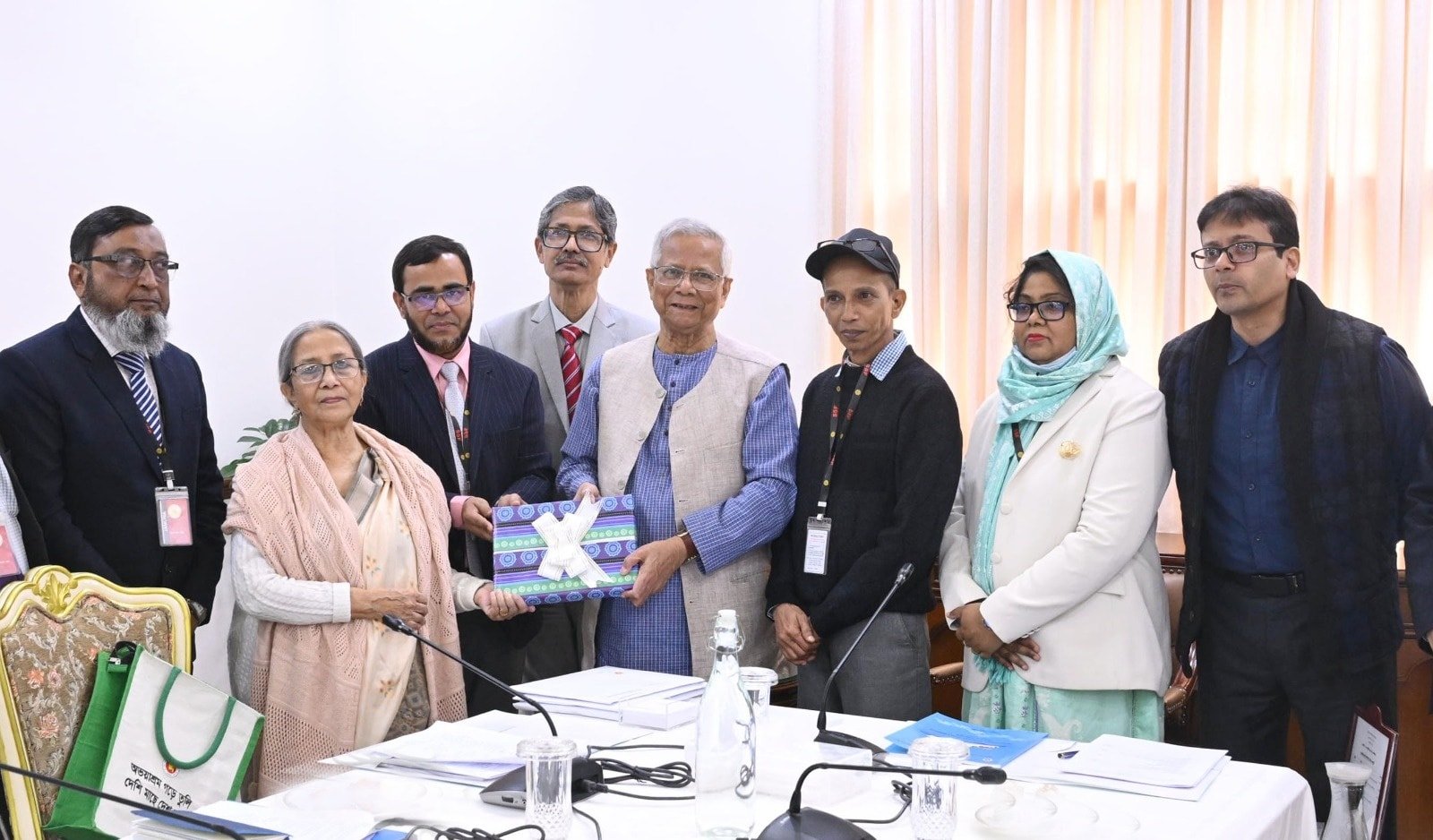
The survey and research report conducted by the research ship R.V. Dr. Fridtjof Nansen on marine fisheries and ecosystems has been submitted to the Chief Adviser by the committee in this regard.
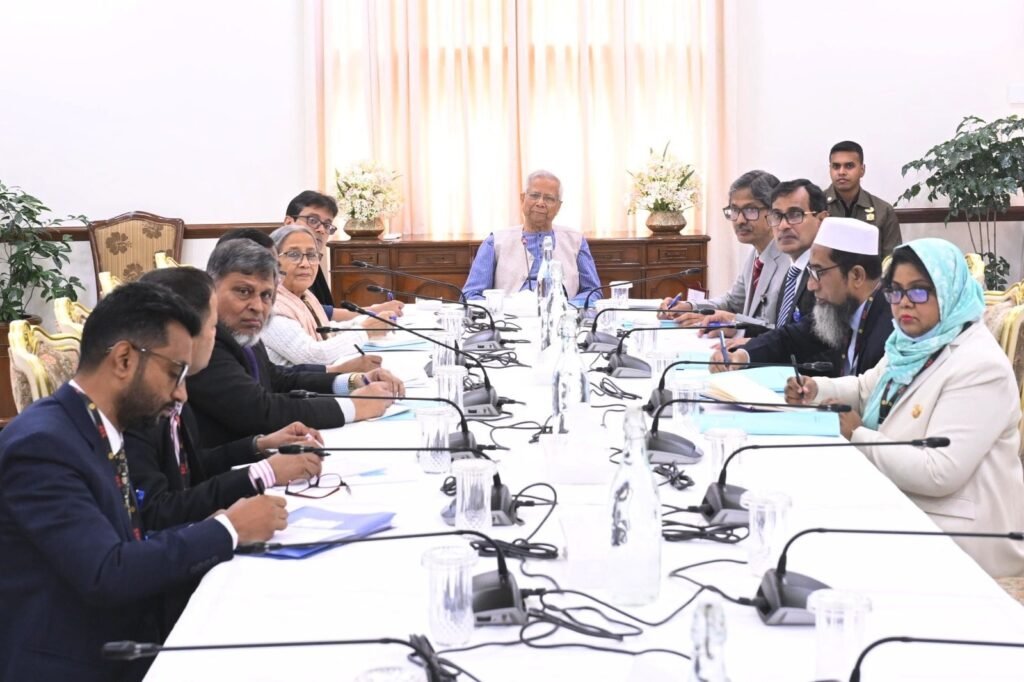
A meeting was held in this regard at the State Guest House Jamuna on Tuesday (January 6, 2026). Fisheries and Livestock Advisor Farida Akhtar, Chief Adviser’s Special Envoy for International Affairs Lutfe Siddiqui, Professor Sayedur Rahman Chowdhury of the Institute of Marine Sciences, University of Chittagong and Assistant Director of the Department of Fisheries Dr. Md. Abdullah Al Mamun were present at the meeting.
The survey was conducted from August 21 to September 21 last year. 25 scientists from eight countries conducted the survey, out of which 13 were from Bangladesh.
Professor Sayedur Rahman presented the research-related data in today’s meeting. He said that the existence of 65 new species of aquatic animals has been found in this study.
He said, ‘The abundance of jellyfish in the deep sea in Bangladesh has increased excessively. This is a sign of imbalance. This is due to overfishing.’
In addition, plastic has been found at a depth of 2,000 meters, which is of deep concern, he said.
Compared to a 2018 study, it has been seen that large fish are decreasing in the deep sea. Fish are decreasing alarmingly in the shallow sea.
It is known that 270 to 280 large fishing trawlers are fishing in the deep sea. Of these, 70 are doing targeted fishing through sonar. This is a very aggressive method. As a result, those who catch big fish in the deep sea benefit, but those who catch fish in shallow water are facing losses.
The fisheries advisor said, ‘If targeted fishing is done in this way, there is a risk that the Bay of Bengal will become empty of fish. The government will decide on sonar fishing.’
Research has revealed that there is an abundance of tuna in Bangladesh for deep sea fishing and there is also potential for it. The research has found a fishing nursery under the Sundarbans, which the government has already ordered to be preserved.
The chief advisor said in the meeting, ‘Our country has an equivalent area in water as its land area. But we have not been able to utilize these resources properly; we have not even been able to know the amount of resources and their potential. We need to utilize these resources well. For that, adequate research and policy support will be required.’
The meeting was informed that the Royal Navy of the United Kingdom, a multi-purpose hydrographic and oceanographic survey vessel, HMS Enterprise, is currently in the process of being handed over to the Bangladesh Navy. The vessel will collect seabed, depth and other marine data, which will be helpful in increasing Bangladesh’s marine research and capacity.
The chief advisor emphasized the importance of coordinating joint research with Japan, Indonesia, and Maldives. He said, “The problems need to be identified. Research needs to be coordinated with those who have expert knowledge in this regard. Through this, new horizons of the economy will be opened.”