Diplomatic Desk:
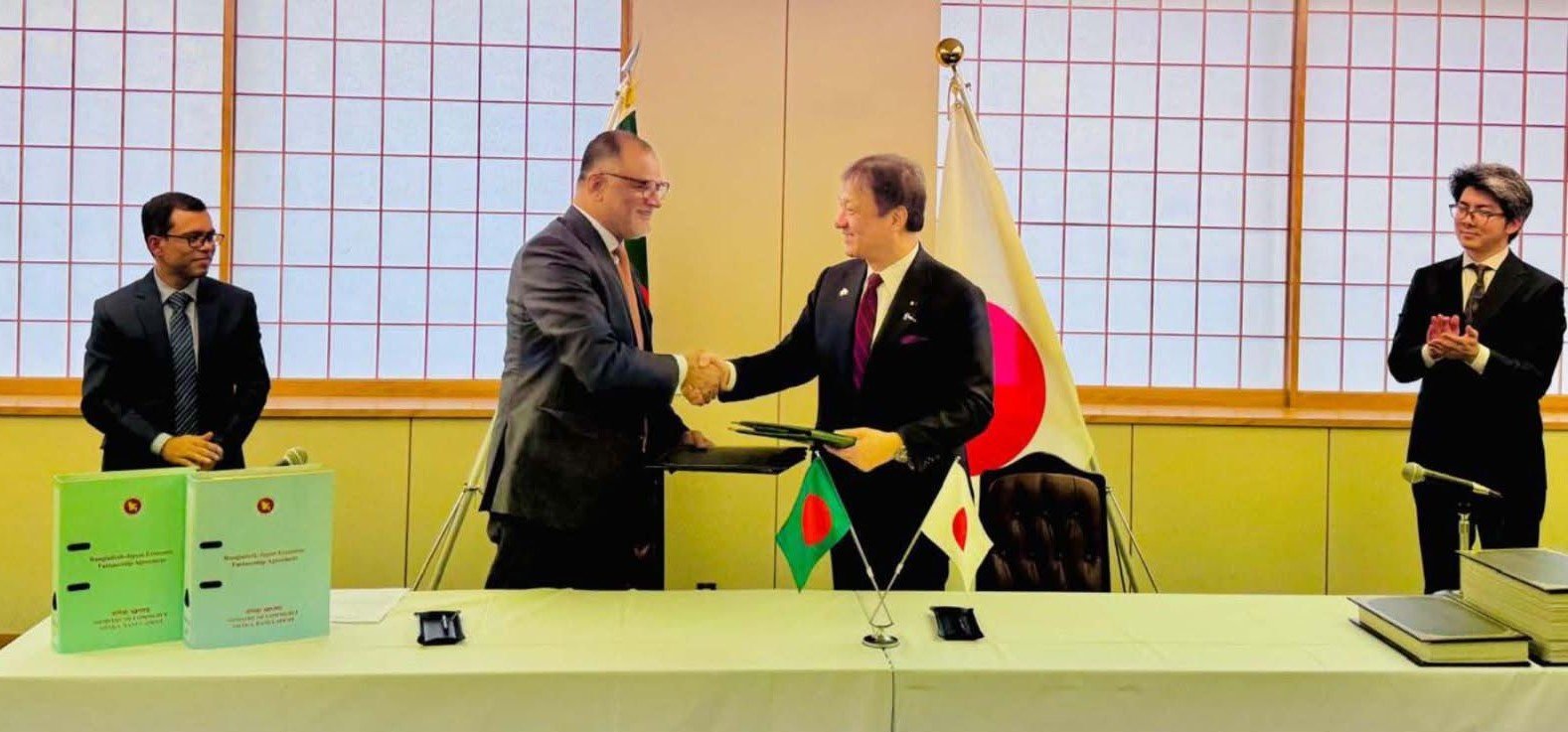
In a landmark milestone in bilateral relations, Bangladesh and Japan officially signed the ‘Economic Partnership Agreement’ (EPA) in Tokyo on Friday (February 6, 2026). This is the first time that Bangladesh has signed an Economic Partnership Agreement with any country.
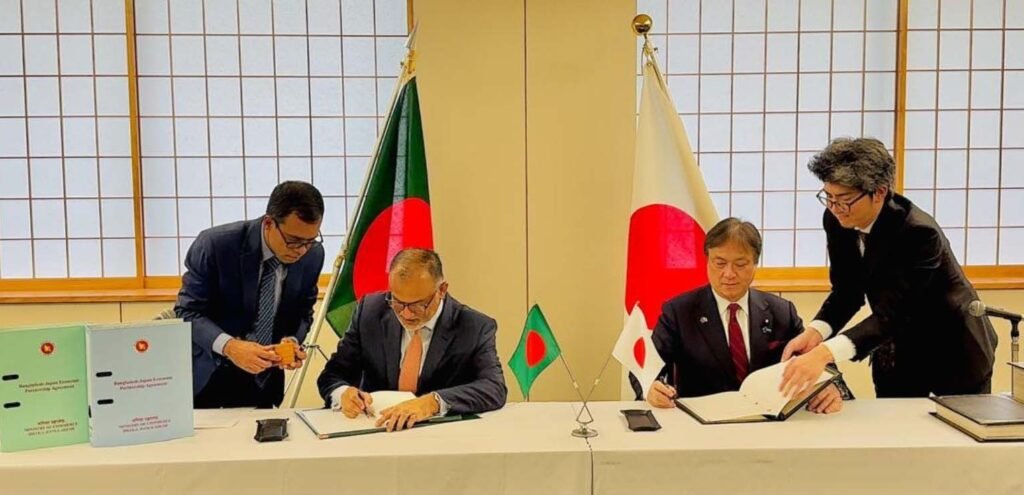
Commerce Adviser Sheikh Bashiruddin and Japanese State Minister for Foreign Affairs Hori Iwao signed the agreement on behalf of their respective governments at a grand ceremony organized at the Ministry of Foreign Affairs of that country. Commerce Secretary Mahbubur Rahman, Bangladesh Ambassador to Japan Md. Daud Ali, Japanese Ambassador to Bangladesh Saida Shinichi and senior officials of both countries were present at the signing ceremony. The agreement is the result of seven rounds of negotiations held in Dhaka and Tokyo on trade in goods and services, investment and economic cooperation.
In his speech at the event, Trade Advisor Sheikh Bashiruddin described the agreement as a reflection of the long-standing friendship between the two countries. He said, this EPA agreement is not just a commercial document; it is an expression of the bright economic future of Bangladesh and the deep mutual trust between our two countries. He expressed optimism that the effective implementation of this agreement will start a new chapter of mutual prosperity.
Under the agreement, Bangladesh will get significant benefits in both trade in goods and services. About 7,379 Bangladeshi products, including ready-made garments, will enjoy 100 percent duty-free benefits in the Japanese market. In return, Bangladesh is also expanding its market for Japan, as a result of which 1,039 Japanese products will gradually get duty-free or preferential benefits.
It is worth noting that with the addition of the ‘single stage transformation’ facility in the garment sector, Bangladeshi garments can now be exported to Japan very easily without any complicated conditions regarding raw materials. In addition, there will be opportunities for Bangladeshi skilled professionals to work in 120 trade in services in about 16 sectors in Japan such as IT, engineering, education, caregiving and nursing, which will ensure more employment for the people of the country in Japan. On the other hand, Bangladesh has agreed to open 98 sub-sectors under 12 sectors to Japan.
In addition to increasing trade volume, it is expected to increase Japanese investment (FDI) in sectors such as manufacturing, infrastructure, energy and logistics. Japanese advanced technology and investment will increase the quality of our domestic products, which will make Bangladesh more competitive globally. In addition, the agreement will serve as a powerful tool for inclusive economic growth and overall socio-economic development of Bangladesh by developing small and medium enterprises (SMEs) and creating a skilled workforce.