Business Desk:
Commerce Minister Khandaker Abdul Muktadir has said that it is possible to increase the country’s export earnings from the current range of about $50-55 billion to $150 billion. He said that achieving this goal is not difficult if a few promising sectors can be taken forward through specific planning, policy support, research and skilled human resource development.
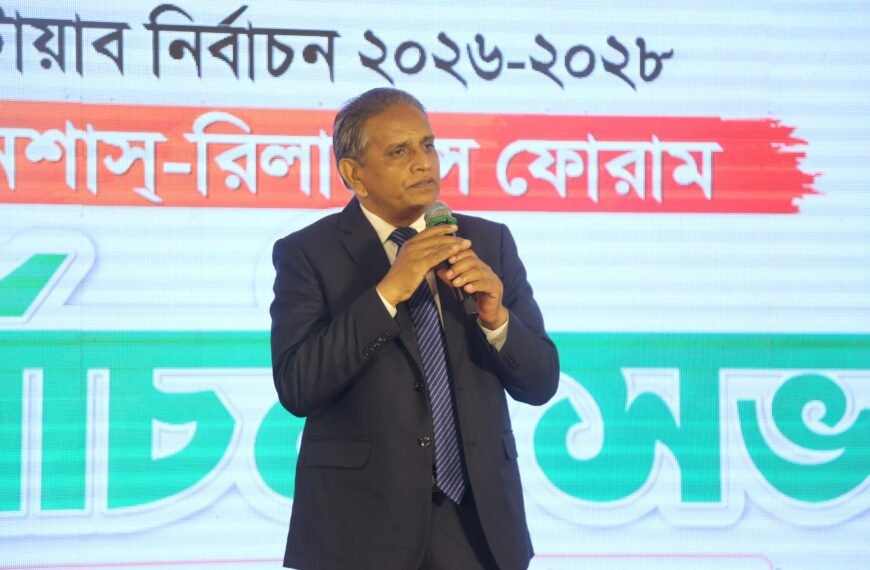
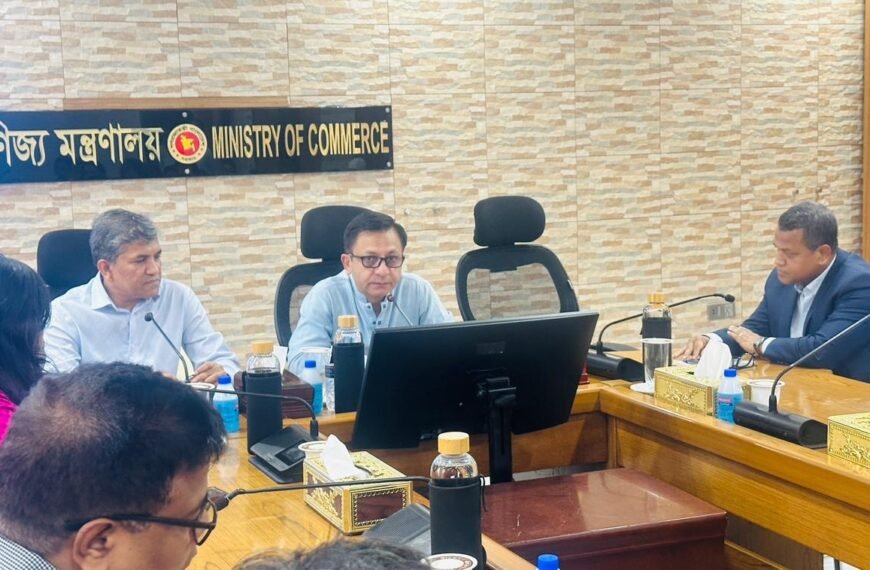
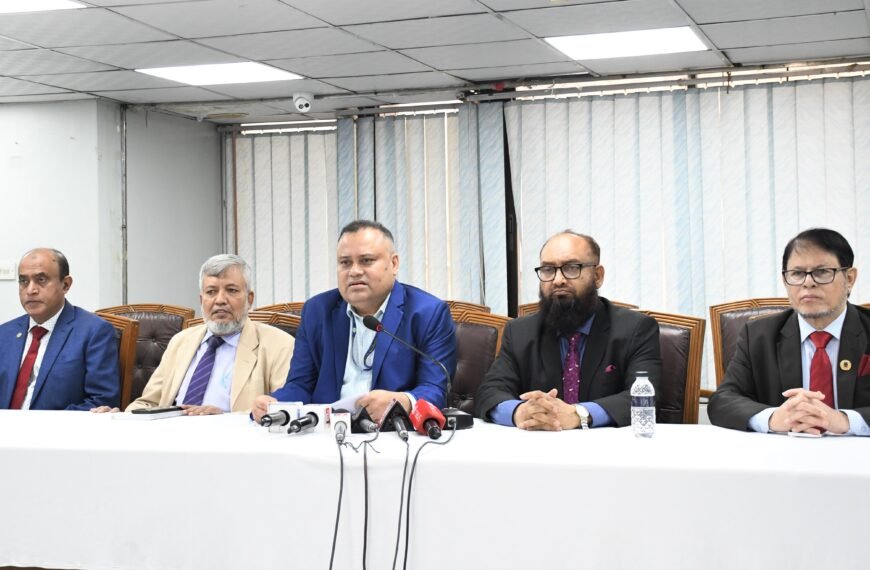
He made these remarks as the chief guest at the DPP presentation and consultation workshop of the proposed project based on the report titled “Competitiveness Assessment Study of Potential Private Sectors of Bangladesh” at the CIRDAP auditorium in the capital today (23 June 2026).
The Commerce Minister said that Bangladesh has fulfilled all the conditions for graduation from LDC. Now the main challenge is to survive in global competition after graduation and achieve the ability to move to the next stage. For this, emphasis should be placed on skill development, research, innovation and technology adaptation in the industrial sector.
He said that although the main idea of the Export Competitiveness for Jobs (EC4J) project is timely, the delay in project implementation is one of the major weaknesses of the country’s development activities. In future, it is necessary to ensure that the work is completed within the stipulated time frame and the ability to adapt to technological changes as needed should be maintained.
The minister said that initiatives are being taken to operate the infrastructure established in the leather and light engineering sector as an international standard skill development center. For this purpose, there are plans to conduct management and training programs through internationally renowned institutions, so that the domestic industry can quickly reach global standards.
Referring to the potential of the jute sector, he said that many times more income is possible in the production of value-added jute products and jute-based fabrics compared to the export of raw jute. There are plans to take up joint research and innovation initiatives with China to strengthen research, technology development and international cooperation in this sector.
He also said that close cooperation should be developed between the government, private sector and academia for industrial development. Taking into account the experiences of successful countries, a system should be put in place to regularly evaluate the goals, methods and results of each project.
The Commerce Minister assured the Ministry of Commerce of its cooperation in solving the problems of private sector entrepreneurs and said, “We are ready to listen to your problems and possibilities. Our goal is to build an effective bridge between the government and businessmen.”
The keynote address was presented by Dr. Mohammad Abdur Razzak, Chairman of Research and Policy Integration for Development (RAPID).
Secretary of the Ministry of Commerce Md. Ataur Rahman Khan presided over the workshop.
The Commerce Secretary said that an initiative has been taken to undertake an integrated project of about Tk 3,000 crore to address the challenges after the transition from LDC and to increase the country’s export capacity. He said that in the second phase of the project, a sector-wise action plan will be formulated by giving utmost importance to the practical experience and needs of the private sector. The feedback from various business organizations, concerned ministries, development partners and experts at the stakeholder consultation workshop held today will play an important role in formulating the project’s Development Project Proposal (DPP).
He further said that the issues of restoration, restructuring and capacity building of the export sector will be included in the project in line with the priorities of the national budget. Stressing the importance of building an effective and sustainable model through ease of doing business, digitalization, policy support and process simplification, he said that the project is being considered for implementation under the supervision of the Ministry of Commerce and, if possible, involving the Export Promotion Bureau (EPB) as the implementing agency. He expressed the hope that through integrated partnership of the public and private sectors, it will be possible to implement a project that will play an effective role in addressing the challenges of post-LDC transition and taking the country’s export growth to new heights.
Sheikh Mohammad Abdur Rahman, Project Director of the Export Competitiveness for Jobs (EC4J) Project, and Hosna Ferdous Sumi, Senior Private Sector Specialist of the World Bank, also spoke at the event.
Representatives of various industry sectors, leaders of business organizations, policymakers, and concerned officials participated in the workshop.