Editor, Mohamed Shajibul-Al-Rajib:
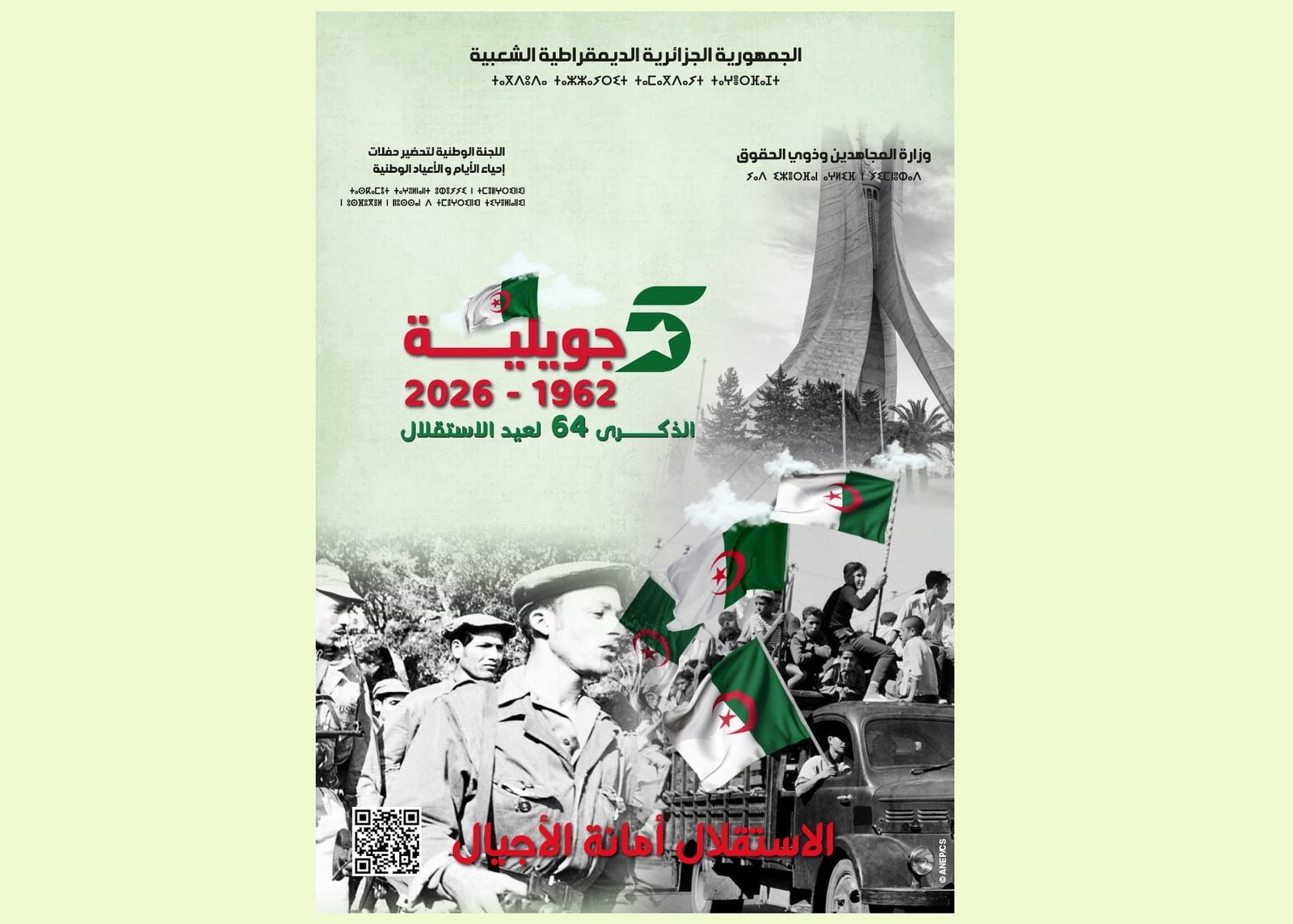
The independence of Algeria in 1962 was not just a matter of restoring the sovereignty of a country; it marked a turning point in the history of national liberation movements against colonial rule in Africa and in various parts of the world. The independence of Algeria challenged the colonial policy of France and played an important role in establishing international recognition of the right of peoples to self-determination.
Algeria’s position in the French colonial system was exceptional compared to other colonies. According to Article 109 of the French Constitution of 1848, Algeria was declared part of French territory, and in the same year Algiers, Oran and Constantine were included as administrative departments of France. As a result, France had long presented Algeria not as a simple colony, but as its own territory. In this context, the Algerian struggle for independence became a major political challenge not only against colonial rule, but also against France’s claims to permanent annexation.
Algeria’s vast territory, strategic location in the southern Mediterranean, geographical importance close to Europe, and the presence of French settlers made the country the focus of French imperialist policy. For this reason, while many other French colonies in Africa were moving towards independence around 1960, France mounted a long and fierce military and political resistance in Algeria. However, the protracted Algerian War made the political, military, and international costs of colonial rule clear.
The Algerian struggle for independence took place at a time when movements demanding independence were gaining strength in various regions of Africa. Although France was gradually conducting the process of decolonization in other parts of Africa, it maintained a hard line on the question of Algerian independence. Although France initially tried to portray the Algerian issue as an internal problem, the scale of the war and the diplomatic activity of the Algerian national liberation movement gave it international importance.
The United Nations also played an important role in this process. On 14 December 1960, Resolution 1514 (XV) adopted by the United Nations General Assembly declared the right of colonial countries and peoples to independence and internationally recognized the principle of self-determination. The following day, Resolution 1541 (XV) set the criteria for full self-government. Resolution 1573 (XV) adopted on 19 December of the same year directly recognized the right of the Algerian people to self-determination and independence. As a result, the Algerian question became part of the framework of international decolonization and the argument that it was only an internal matter for France was weakened.
The Algerian independence struggle set a new precedent for national liberation movements around the world. This proved that a liberation movement could succeed not only through armed resistance, but also through political organization, national unity, effective leadership, diplomatic efforts, and international support. This experience later became an inspiration for many liberation movements.
After independence, Algeria made this experience part of its foreign policy. The country provided various national liberation movements with political recognition, diplomatic assistance, asylum, training, logistical support, and the opportunity to gain recognition in the international arena. In February 1963, an office of the Angolan Popular Movement for the Liberation of Angola (MPLA) was established in Algiers, which strengthened the movement’s international communications and diplomatic activities.
Algeria also provided military, financial, and logistical support to FRELIMO in Mozambique and the PAIGC in Guinea-Bissau and Cape Verde, which were fighting against Portuguese colonial rule. Various historical sources mention that Algeria hosted training camps for Angolan and Mozambican freedom fighters and played an important role in achieving international recognition for these movements.
Algeria also played a significant role in the anti-apartheid movement in South Africa. In 1962, Nelson Mandela received military training from the Algerian National Liberation Front (FLN). This not only reflected Algeria’s practical support, but also an example of conveying their experience of the freedom struggle to other liberation movements.
Algeria also actively participated in the activities of the ‘Coordinating Committee for the Liberation of Africa’ of the Organization of African Unity (OAU), established in 1963. Through this platform, various liberation movements received diplomatic, financial, military and logistical support. Algeria’s contribution there was of particular importance due to its own experience of the freedom struggle.
According to analysts, Algeria’s independence was not just a victory for one nation; It created a strong foundation for the international movement for self-determination, sovereignty, and the end of colonial rule. Even after independence, Algeria continued to support just liberation struggles in Africa and other regions of the world. For this reason, the country’s independence is still considered not only a historical event, but also one of the foundations of its diplomatic identity, commitment to African solidarity, and international justice.