Desk Report:
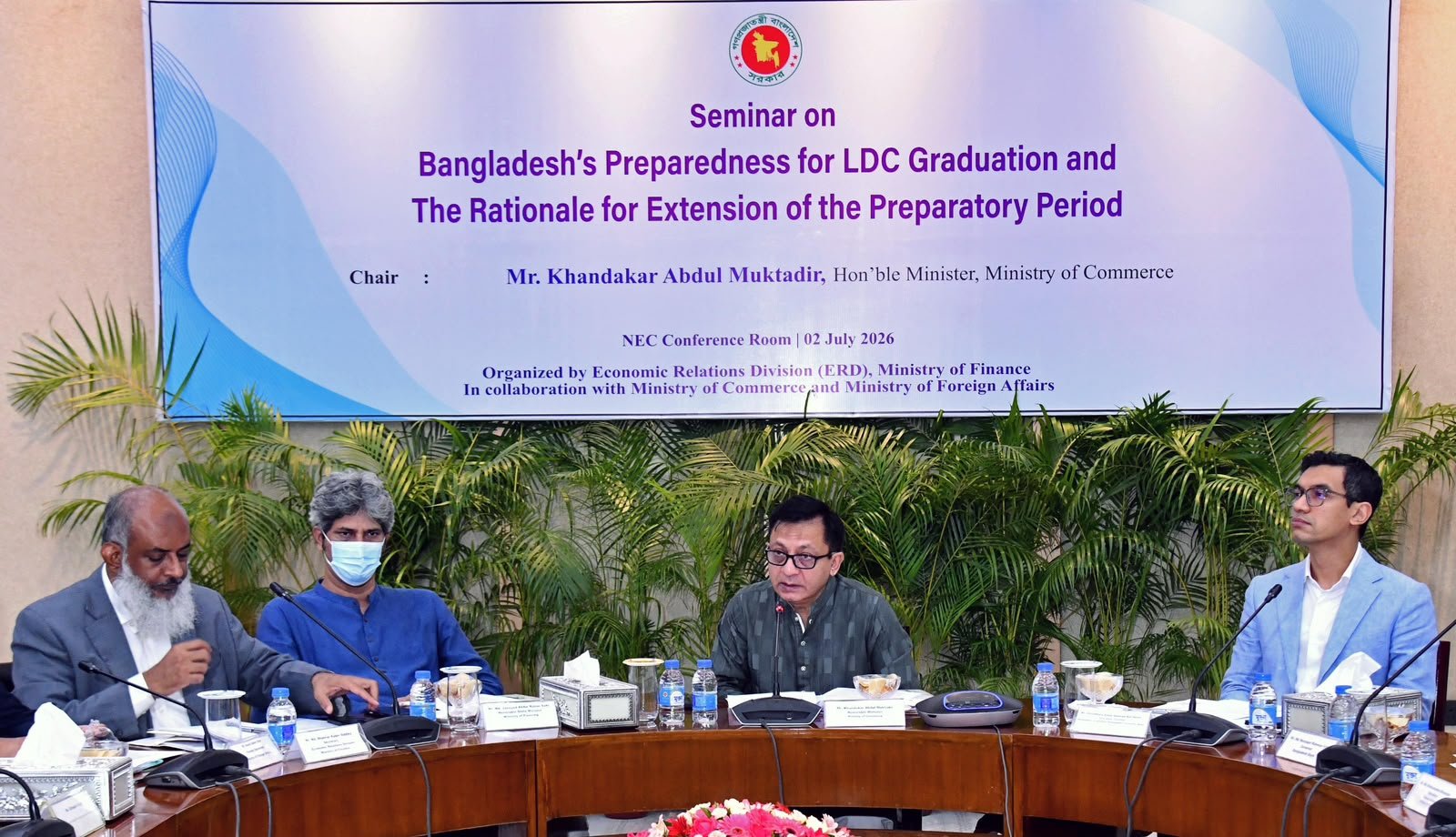
Commerce Minister Khandaker Abdul Muktadir has said that the purpose of extending Bangladesh’s LDC graduation preparation period is not to delay the graduation; rather, to ensure a sustainable and orderly transition.
He said, “We do not want this additional time for graduation for any delay; rather, we want it for a sustainable, stable and effective economic transformation.”
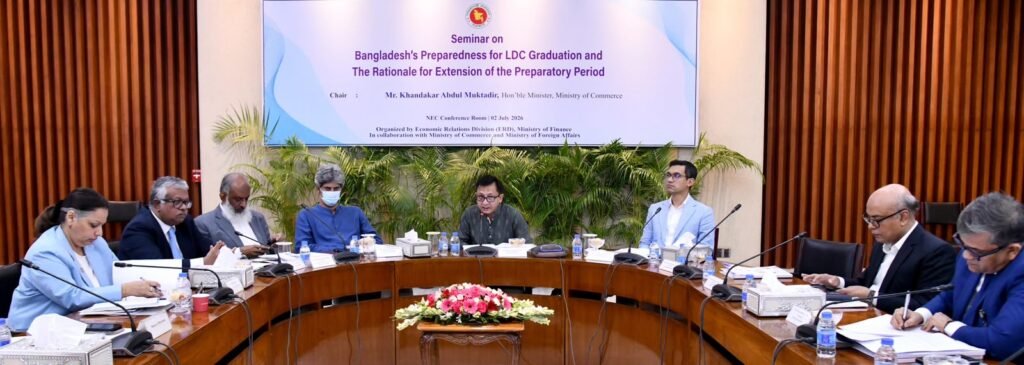
He made these remarks in his presidential address at a seminar titled ‘Bangladesh’s Preparedness for LDC Graduation and the Rationale for Extension of the Preparatory Period’ held at the NEC Conference Room in Agargaon today, Thursday (July 2, 2026).
The seminar was organized by the Economic Relations Division (ERD) of the Ministry of Finance in collaboration with the Ministry of Commerce and the Ministry of Foreign Affairs.
It is worth noting that the Bangladesh government has formally requested the United Nations Committee for Development Policy (UNCDP) to extend the preparatory period for LDC graduation by another three years.
In continuation of that, after consulting with the Bangladesh government and analyzing the existing situation, the United Nations Committee for Development Policy (UNCDP) has responded positively to Bangladesh’s request and submitted their assessment report to the United Nations Economic and Social Council (ECOSOC). Now, it is expected that ECOSOC will consider the issue of the extended preparation period and send the proposal to the UN General Assembly for final approval.
In this context, this seminar was organized to inform foreign diplomatic missions, development partners and other stakeholders in Bangladesh in detail about the preparatory activities for Bangladesh’s transition from LDC and the progress achieved in its implementation and the need to extend this preparation period to ensure a smooth and sustainable transition.
Speaking on the occasion, the Commerce Minister said that immediately after assuming office, the current government requested the United Nations Committee for Development Policy (CDP) to extend Bangladesh’s preparation period for LDC transition by three years.
He said that during the preparatory period, Bangladesh has faced multiple global and internal challenges. These include global trade instability, geopolitical instability, high inflationary pressures and supply chain disruptions. These situations have put pressure on Bangladesh’s macroeconomics and have created constraints on institutional capacity. Therefore, the government’s immediate priority is to restore macroeconomic stability and strengthen the foundation for sustainable development.
Citing the Graduation Readiness Assessment Report conducted by the United Nations OHRLLS, the minister said that the current situation is not conducive enough for LDC transition within the stipulated time frame. Therefore, additional preparatory time is needed.
He said that the government has already adopted a roadmap consisting of 25 priority reforms. These include – macroeconomic stability, trade and investment reforms, deregulation, increasing competitiveness, institutional strengthening and human resource development.
The Commerce Minister said, “We are working to reduce the time to start a business from one year to 14 days, so that on the 15th day, an institution can open an LC for importing machinery.”
He further said that initiatives have been taken to identify and eliminate existing complications and overlaps in the business registration and licensing process, so that the time and cost of doing business are significantly reduced.
It was informed at the seminar that the implementation activities are being monitored through the National Graduation Monitoring and Coordination Committee and the Public-Private Task Force formed by the government.
The Commerce Minister said that although the current government took office only four months ago, it has already undertaken important reform programs.
State Minister for Planning Md. Jonayed Abdur Rahim Saki, who was present at the seminar, said that the current government is working to revive the economy and restructure institutions by addressing the challenges of a fragile economy and a weak financial sector. For this purpose, the period of international cooperation and continued support from development partners are needed. He said that cooperation from everyone is essential to overcome the crisis and move forward on the path of sustainable development and prosperity.
While presenting the keynote address of the seminar, Secretary of the Economic Relations Division Md. Shahriar Quader Siddiqui highlighted the main risks and challenges existing in Bangladesh at the economic, structural and international levels. He also presented the government’s strategic priorities and a time-bound roadmap for effectively utilizing the proposed extension of the preparation period to ensure a smooth and sustainable LDC transition.
Noting that the international business environment is currently very dynamic, EU Ambassador to Bangladesh Michael Miller said it was crucial to ensure that Bangladesh’s momentum in reforms does not stall.
He added that the EU is seriously considering the opportunities and prospects for closer trade relations with Bangladesh. However, he stressed the need to further open up the market and ensure a level playing field in this regard.
Foreign Secretary Asad Alam Siam, Finance Secretary Dr. Md. Khairuzzaman Majumder, Commerce Secretary Md. Ataur Rahman Khan, Bangladesh Pharmaceutical Industry Association (BAPI) President Abdul Muktadir, UN Resident Coordinator (Acting) Gitanjali Singh, Honorary Fellow of the Center for Policy Dialogue (CPD) Professor Dr. Mostafizur Rahman, Executive Director of the South Asian Network on Economic Modeling (SANEM) Dr. Selim Raihan, President of the Footwear, Leathergoods and Accessories Exporters Association Syed Nasim Mahjur, and representatives of the Bangladesh Garment Manufacturers and Exporters Association (BGMEA) and Dhaka Chamber of Commerce and Industry (DCCI) also spoke at the seminar.
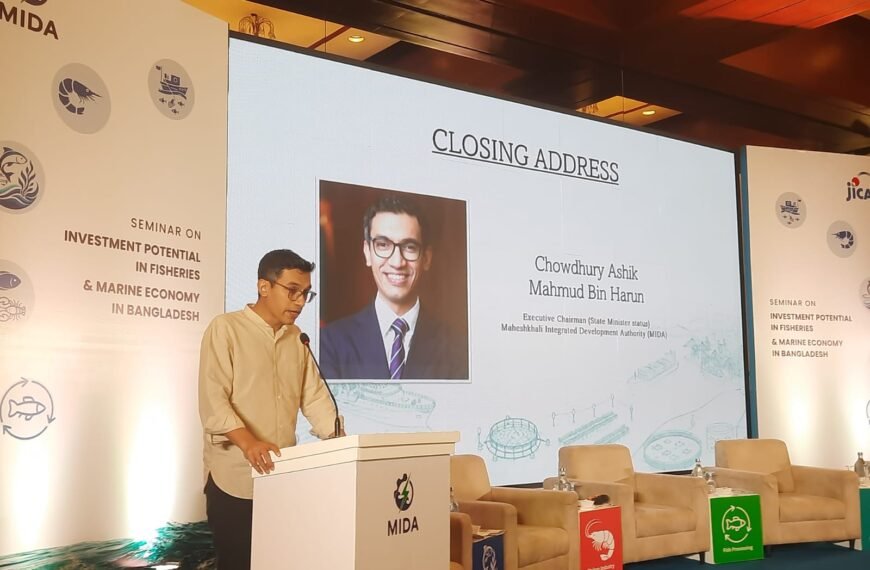
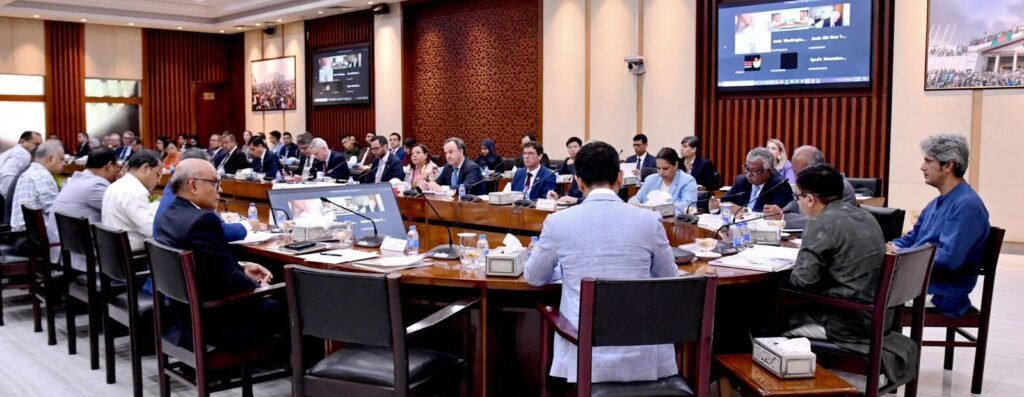
In addition, ambassadors of Sweden, Norway, Indonesia, Switzerland, Thailand, Nepal and Vietnam also spoke at the seminar. Chowdhury Ashiq Mahmud Bin Harun, Executive Chairman of Bangladesh Investment Development Authority, and Ahsan Habib, Chairman of National Board of Revenue, were also present at the seminar.
The ambassadors and high commissioners participating in the event emphasized on export diversification, necessary reforms in the financial sector, and expansion of tax coverage to ensure sustainable LDC transition.
Ambassadors, high commissioners, and representatives of foreign diplomatic missions of different countries, representatives of development cooperation agencies, the private sector, think tanks, various ministries, and government agencies participated in the seminar.